The Stripe Test: Why a Sharp Blade Is the Cheapest Curb-Appeal Upgrade in Your Garage
Walk down any suburban street at the end of a Saturday and you'll see it: two lawns, identical irrigation, identical fertilizer schedule, completely different look. One has the deep crisp color and the mowed-stripe pattern; the other looks faded and uneven a few days after a cut.
The variable is almost never what people think it is. It's the blade.
The "stripe test"
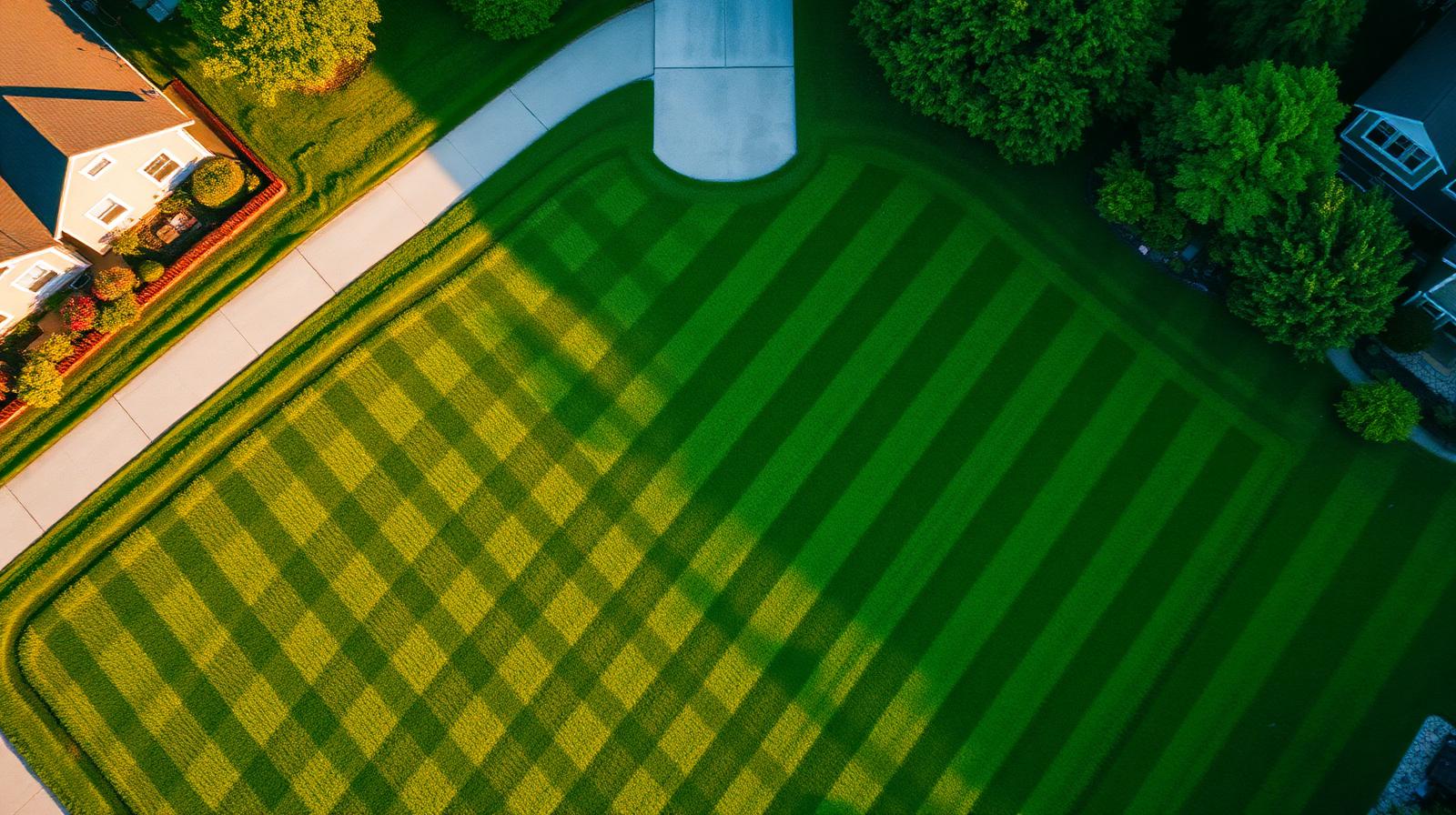
The mowing stripe — that contrast of light and dark bands when you alternate mowing direction — only works when grass blades are cut cleanly and bent uniformly. A dull blade tears unevenly, so the bend angle varies blade-to-blade, so the light doesn't catch the same way. Stripes go muddy.
Professional sports-field crews care about this so much that the Sports Turf Managers Association has whole technical bulletins on cut quality. Major league baseball groundskeepers sharpen reel blades daily. Your rotary mower doesn't need that cadence, but the principle is the same: the look of the lawn is the look of the cut.
How often Americans actually sharpen
The honest answer: almost never.
- About half of U.S. homeowners surveyed have never sharpened their mower blade, according to outdoor-power-equipment industry research summarized by groups like the Outdoor Power Equipment Institute.
- The minority who do sharpen typically do it once a year or less, per university extension surveys.
- The recommended cadence — from extension agronomists at programs like the University of Minnesota and Purdue Turf Science — is every 20–25 hours of mowing, which works out to roughly once a month during growing season.
The gap between recommended and actual is the entire reason your lawn looks the way it does.
The throwaway-mower problem
Here's the part that should bother everyone. The EPA's nonroad small-engine emissions data and municipal solid-waste reporting both track outdoor power equipment in the disposal stream. Independent repair-shop surveys have found that a large share of mowers brought in or thrown out still run and still cut — they just cut badly. The owner concludes the mower is finished and buys a new one.
What's actually wrong, in the majority of those cases:
- Dull blade.
- Clogged underside of the deck (which happens faster with a dull blade — torn grass packs harder than sliced grass).
- Air filter or spark plug overdue on a gas mower.
That's it. Three maintenance items, two of them upstream of blade sharpness. A $30 sharpening tool and 60 seconds of work would have saved the mower.
Meanwhile, the same household is paying $300–$700 to replace it. The Consumer Reports lawn mower buying guide is implicitly built around this — most people will buy at least three mowers in their adult life, and most of them will throw away machines that still cut.
For the engineering reasons that a dull blade also wrecks the mower itself (especially on the electric side), see the deeper piece: How a sharp mower blade extends the life of your electric mower (and your battery).
What a sharp blade actually changes about the look
Three visible things change within the first week of going from dull to sharp:
- Tip color. Torn grass tips brown out within 24 hours of cutting. Sliced tips don't. A sharp-cut lawn looks greener immediately, before any fertilizer has been added.
- Uniformity. Stragglers — the tall blades a dull mower bends instead of cutting — disappear. The lawn looks like it was leveled, not like it was attacked.
- Stripe contrast. Because the bend angle is consistent, the light/dark alternation actually shows up. Even on a modest residential lawn, the difference is visible from the curb.
There's also a disease-pressure argument — torn grass blades are open wounds and fungal pathogens take advantage — but the cosmetic effects show up first and are what most homeowners notice.
The neighbor with the perfect lawn
The neighbor whose lawn always looks better than yours probably isn't doing anything dramatic. Same water, same fertilizer, same mower brand. He sharpens. That's it.
The math, if you want to copy him:
- 60 seconds per blade side, once a month, growing season.
- Total annual time investment: about 24 minutes.
- Total annual cost on a Complete Bundle: less than the price of one bag of premium fertilizer.
The product pitch we'll actually own
We built The Core and the Complete Bundle to remove the only real reason this gap exists between recommended and actual sharpening cadence: the time and friction of doing it. Sixty seconds is the entire pitch.
If you want the engineering case for why this matters even more on a cordless electric mower — battery cycles, motor heat, thermal cutoff trips — we wrote the long version: How a sharp mower blade extends the life of your electric mower (and your battery). And if the safety side is what hooked you, the companion piece is Mower Blade Injuries: The Hidden Cost of Removing Your Blade.
A clean cut is the cheapest curb-appeal upgrade you can give your house. Your neighbor already knows.
— The 60 Seconds Sharp team. Shop the Bundle · Back to home